

Can You Resurface a Cutting Board Instead of Replacing It?
A worn cutting board doesn’t automatically need to be replaced. In many cases, a solid wood board can be resurfaced and returned to regular use. Understanding what resurfacing actually involves — and when it makes sense — helps set realistic expectations about longevity, value, and care.
Resurfacing is not about restoring a board to a brand-new appearance. It’s about extending the useful life of a board by refreshing the working surface when wear becomes noticeable.
What “Resurfacing” Really Means
Resurfacing a cutting board means removing a thin layer of wood from the surface to eliminate knife marks, staining, or uneven wear. This reveals fresh wood underneath and restores a flatter, smoother cutting surface.
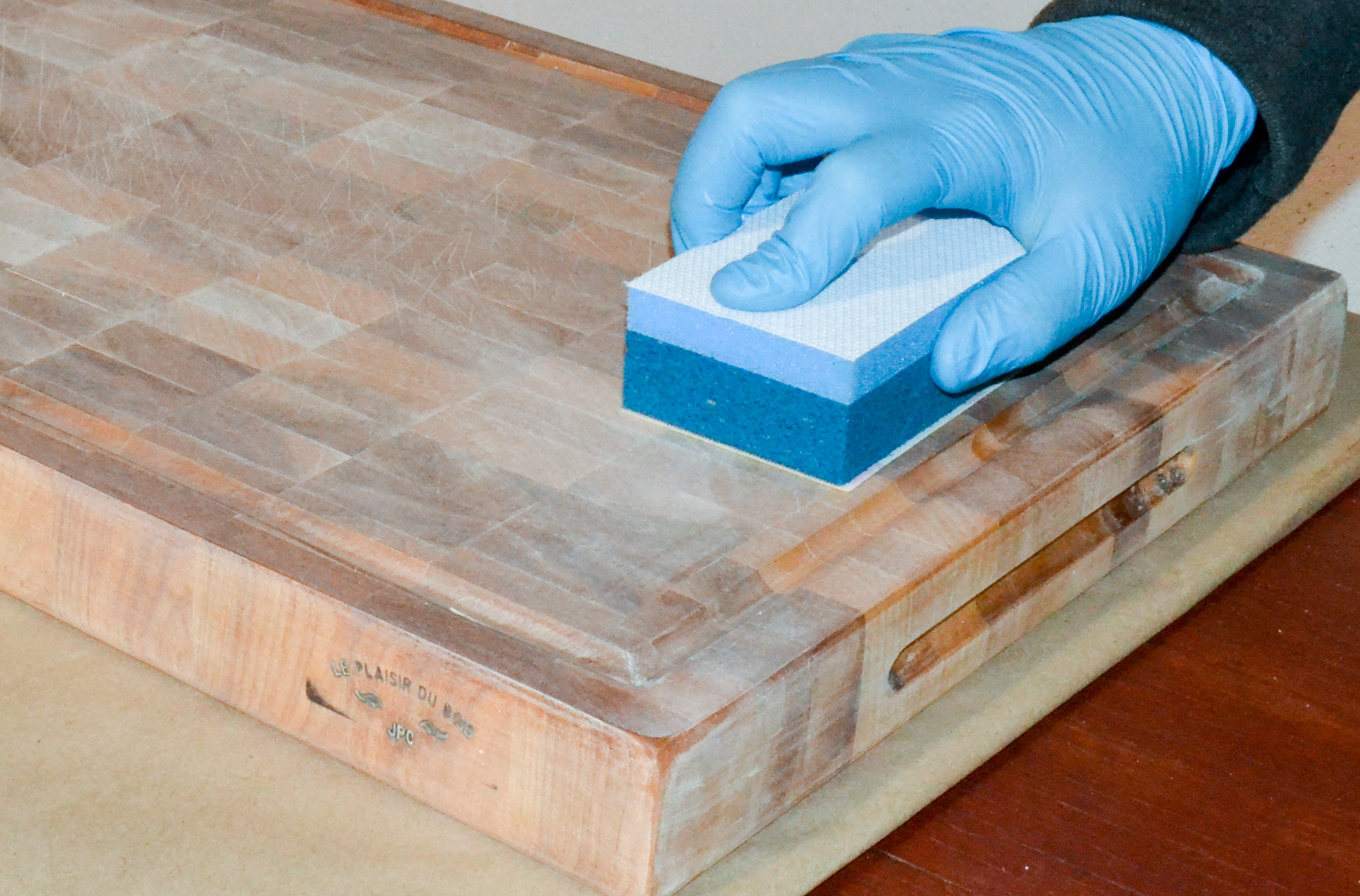
This process typically involves controlled sanding or planing done evenly across the board. The amount of material removed is small, but enough to reset the surface.
Resurfacing does not:
-
Repair cracks that go through the board
-
Fix structural warping
-
Change the board’s original construction
It’s a maintenance option, not a cure-all.
When Resurfacing Makes Sense
Resurfacing is most appropriate when the board is structurally sound but cosmetically or functionally worn.
Common situations where resurfacing is reasonable include:
-
Deep or clustered knife marks that affect cutting comfort
-
Surface staining that doesn’t wash out
-
Raised grain that no longer smooths with oiling
Solid wood boards made with adequate thickness are well suited to resurfacing. Because they start thicker, removing a small amount of material does not compromise strength or usability.
Boards used frequently for years often benefit from resurfacing as a way to “reset” wear rather than replacing a product that is otherwise performing well.
Resurfacing also makes sense for owners who value long-term ownership. Instead of treating a board as disposable, resurfacing acknowledges that visible wear is a normal result of use, not failure.
Boards That Can Be Resurfaced
Not all cutting boards are good candidates.
Boards that typically can be resurfaced:
-
Solid wood boards with sufficient thickness
-
Boards that remain flat and stable
-
Boards with surface-level wear only
Boards that are generally not good candidates:
-
Very thin boards with limited material to remove
-
Boards with deep cracks or splits
-
Boards that have warped significantly
-
Boards made from layered or composite constructions
If resurfacing would leave the board too thin for comfortable use, replacement is the more practical option.
When Replacement Is the Better Choice
There are cases where resurfacing no longer makes sense.
If a board shows structural damage — such as cracks that run through the full thickness or persistent warping — removing surface material will not solve the underlying issue.
Replacement may also be appropriate when:
-
The board has already been resurfaced multiple times
-
The surface wear is uneven due to long-term moisture damage
-
The board no longer sits flat on the counter
At this point, replacement isn’t about failure. It’s simply the natural end of a long service life.
Resurfacing vs Routine Maintenance
It’s important to distinguish resurfacing from regular care. Oiling and light cleaning help slow wear, but they don’t remove material or erase deeper marks.
Most boards do not need resurfacing often. Many owners never resurface a board at all. Others may do it once after several years of heavy use.
The need for resurfacing depends on:
-
How aggressively the board is used
-
Knife style and cutting habits
-
How well the board is maintained
There is no standard interval. Like oiling, resurfacing is driven by condition, not schedule.
A Long-Term View of Cutting Boards
Solid wood cutting boards are built with longevity in mind. Knife marks, surface wear, and visual aging are expected outcomes of regular use.
Resurfacing is one way to extend that lifespan when surface wear becomes noticeable. Replacement becomes the right choice only when the structure itself is compromised.
Seen this way, a cutting board is not a short-term kitchen accessory. It’s a durable tool that can serve for many years, sometimes decades, with reasonable care and realistic expectations.
Built to Be Maintained
A well-built solid wood cutting board can be resurfaced multiple times over its lifespan. Thickness and construction determine how long a board can be safely renewed.